As September draws to a close, the change in season provides a useful opportunity for glasshouse growers to review their irrigation. Growing conditions are changing, new crops may be coming into production, and watering routines need to keep pace.
At Ebtech Glasshouse Systems, we understand that efficiency matters throughout the year. Making better use of water, nutrients, space and staff time can all contribute to a more productive growing operation.
For suitable container-grown crops, ebb-and-flood benching offers a practical way to bring irrigation and benching together.
What is ebb-and-flood benching?
Ebb-and-flood benching, also known as ebb-and-flow benching, waters plants from below.
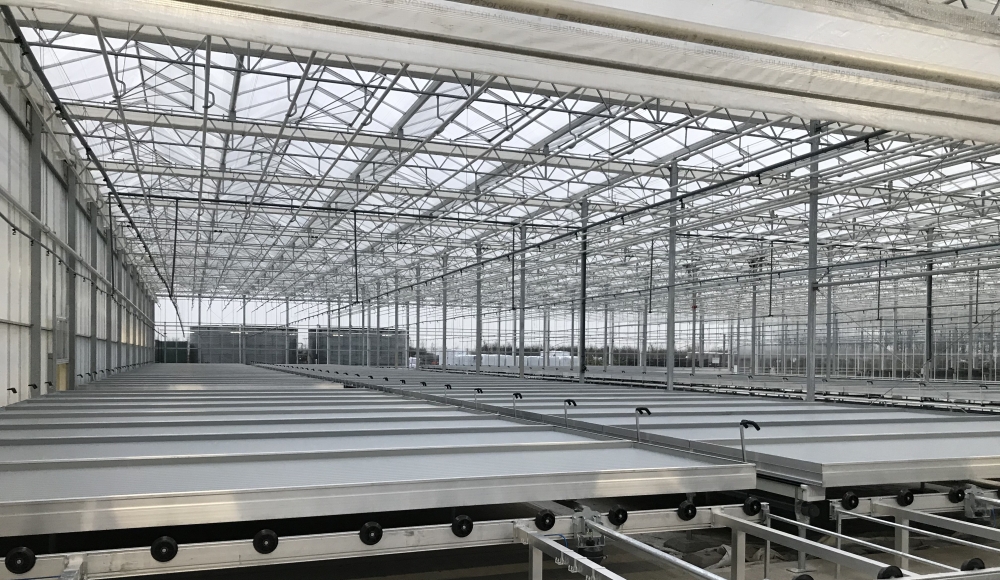
Pots or trays sit on a watertight bench surface, which is temporarily flooded with water or nutrient solution. The growing medium absorbs moisture through openings in the base of each container, drawing it upwards towards the roots.
After a controlled period, the remaining solution drains back into a storage tank for reuse. Plants are watered in cycles, rather than being left standing permanently in water.
Our ebb-and-flood benching systems use this recirculating approach to help growers manage irrigation while conserving resources.
Why review irrigation as the seasons change?
Watering requirements depend on the crop, its stage of growth, the growing medium and conditions inside the glasshouse. Temperature and humidity influence how quickly moisture is lost, so a routine that suited summer production may need adjusting as autumn progresses.
The seasonal transition is a sensible time to review irrigation frequency, check drainage and assess whether different crops need separate watering schedules. The aim is to match irrigation to actual crop requirements.
Automation can help growers deliver a repeatable watering programme, but settings still need to be reviewed as conditions change. Regular crop checks remain an essential part of getting the best from the system.
Making better use of water and nutrients
Recirculation is one of the main advantages of ebb-and-flood irrigation. Unused solution is collected for another cycle, reducing the water and nutrients lost through runoff compared with systems that discharge excess irrigation water.
For growers reviewing resource use, this provides an opportunity to make irrigation more efficient while continuing to meet the needs of the crop.
Consistent irrigation can also support more uniform growth. However, plants sharing a watering zone need compatible requirements. Different container sizes and growing media can absorb water at different rates, so the layout and irrigation programme should reflect the plants being grown.
Watering from below also avoids directly wetting foliage, which may help reduce some foliar disease pressures. Good ventilation, hygiene and water management remain important.
Reducing time spent on routine watering
Manual watering can take up a significant part of the working day, particularly where large numbers of pots or trays need individual attention.
An automated ebb-and-flood installation can irrigate a whole bench or growing zone through a controlled cycle. This can reduce repetitive watering tasks and free up staff time for crop inspection, handling and other production work.
The level of automation should suit the operation. A practical solution for a smaller nursery may look quite different from one designed around a larger facility’s production schedule.
Combining irrigation with an efficient bench layout
The way benches fit into a glasshouse can be just as important as how they are watered.
Where mobile benching is appropriate, benches can move sideways to create access where it is needed, reducing the space dedicated to permanent aisles. That can make more of the available floor area usable for production.
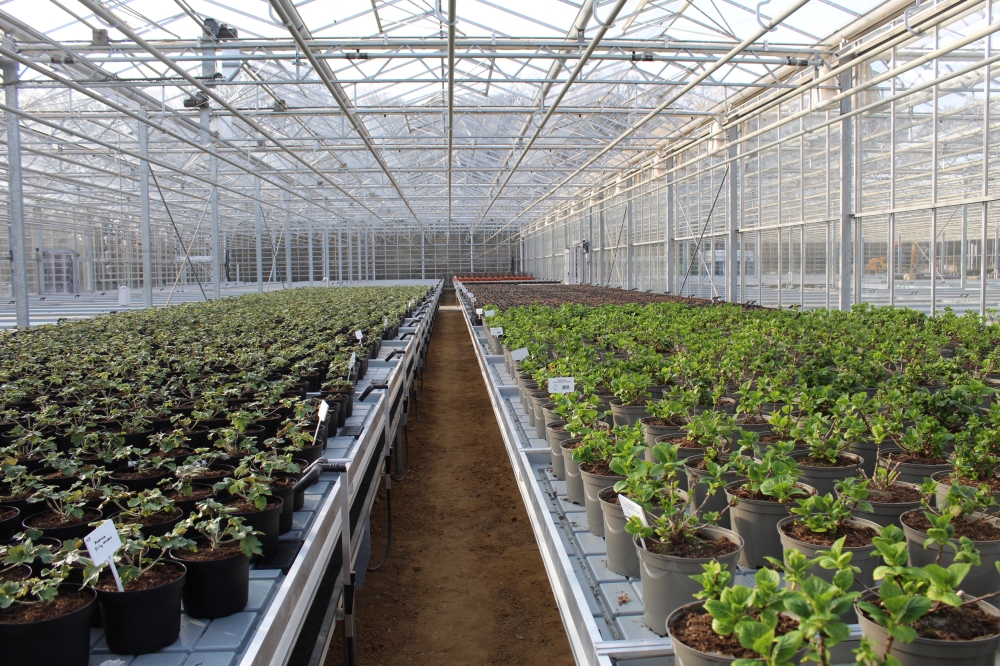
This space benefit comes from the mobile layout, rather than the flooding process itself. Ebb-and-flood trays can form part of different benching arrangements, depending on the facility.
At Ebtech Glasshouse Systems, our benching range includes static, mobile and container systems, allowing irrigation, access and crop movement to be considered together.
Getting the system right
Reliable performance starts with a design that suits the crop and the glasshouse.
Benches need to fill and drain properly, supported by suitable water storage, pumps and controls. The system also needs to be straightforward to inspect, clean and maintain.
Reusing irrigation water requires ongoing attention to water quality. Nutrient levels and pH need monitoring, while cleaning and appropriate water treatment help manage the risk of plant diseases spreading through shared water.
When considering an installation, a useful starting point is to look at where the current setup creates unnecessary work or waste. That helps identify which changes would make the biggest practical difference.
Exploring the right solution with Ebtech Glasshouse Systems
Autumn is a good opportunity to ask whether your benching and irrigation still meet the needs of your business.
Whether you are reviewing an existing facility or planning a new glasshouse, our team can discuss a benching solution suited to your crops, layout and workflow.
Explore our glasshouse benching systems or contact Ebtech Glasshouse Systems to discuss your requirements.